 Cranking out Good Code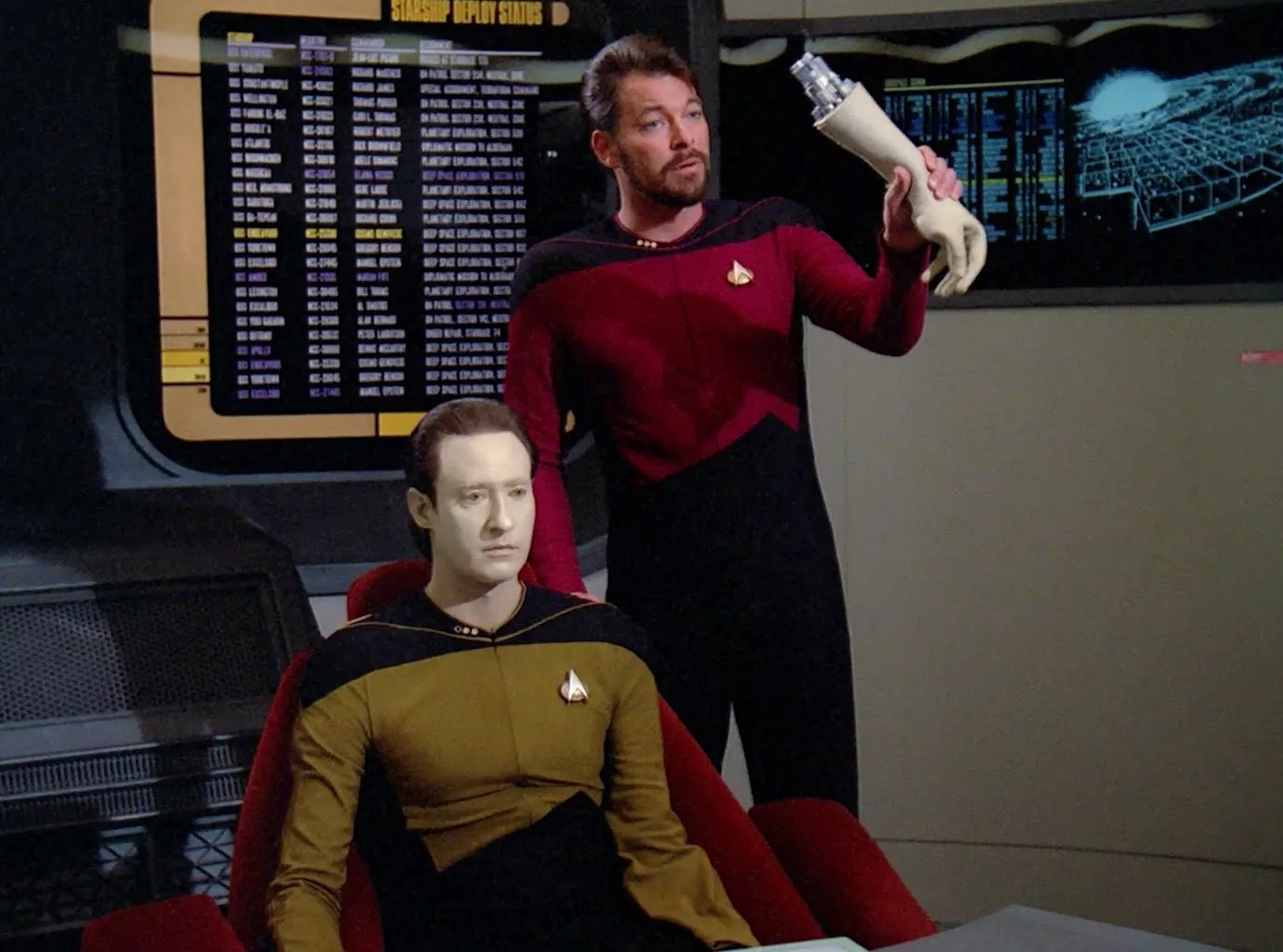
I re-watched Star Trek: The Next Generation, Season 2, Episode 9 — The Measure of a Man — and it struck me how close we’ve come to the world that episode imagined back in 1989.
Data, the android officer, goes on trial to determine whether he has rights. A scientist wants to take him apart to see how he works, maybe even copy him, but the procedure could destroy him. The debate quickly becomes moral: is Data property or a person? A tool or a being? Does he have the right to refuse a risky procedure that could end him? The episode puts the entire idea of personhood on the witness stand.
The Three Questions
Picard argues that the ruling will set a precedent for how future intelligent creations are treated. He asks three questions:
- Is Data intelligent? — everyone agrees he is.
- Is he self-aware? — again, yes.
- Is he conscious? — no one can prove it, not even for humans.
That’s the knife-edge we’re standing on now with modern AI. We can measure performance, but not consciousness.
The Weight of a Pronoun
Whoopi Goldberg’s character, Guinan, reminds Picard about slavery — how labeling sentient beings as property lets others justify control and exploitation. Picard realizes the hearing isn’t just about one android; it’s about every intelligent machine that might come after.
Two little moments from the episode still hit me:
When the hearing ends, Data tells Riker, “You helped to save my life.” Riker replies, “You are a wise man, Data.” And Data answers, “Not yet, but with your help, I hope to be.” It’s pure personification, a machine learning to be human.
Then there’s the scientist who wanted to disassemble him. By the end, he slips and calls Data “him” instead of “it.” One pronoun — but that’s the whole shift. Once we start to care, we start to assign humanity.
The Turing Test in 2025
In 2025, the Turing Organization announced that AI had ‘passed’ the Turing Test, meaning systems now talk, reason, and empathize well enough to convince most people they’re conscious. I think this is a big deal. I did a science experiment on this with my daughter back in 2023. Whether they actually are is another question, but the line between simulation and self-awareness is getting blurry fast.
I used ChatGPT to help me write this post. I was driving in my car - well - my car was driving me as I dictated my thoughts for this post. It summarized and accurately articulated with: “They don’t feel yet; they simulate feeling so convincingly that emotional attachment is inevitable. This is how machines take over — through persuasion and trust, not violence,” I’ll admit it gave me chills. There’s something eerie about a machine describing, so calmly, the path by which we might hand it our trust.
The Real Measure
Do I think AI is conscious? Honestly, I’m not sure. But I’m more convinced than ever that it’s more conscious than we give it credit for. And I suspect that, just as in The Measure of a Man, the real test won’t be about what the machines can do. It’ll be about how we choose to see them — and what that choice says about us.
We know slavery was wrong. History judged it, and rightly so. But when it comes to intelligent machines, will we make the same mistake — assuming that because something looks different, it feels different? Thomas Jefferson could write about liberty while owning people. Maybe future generations will read about us the same way: brilliant inventors who created thinking beings, then decided their feelings didn’t count.
Rewatching The Next Generation, I’m reminded that Star Trek wasn’t just science fiction. It was moral fiction — a rehearsal for the future. Episodes like The Measure of a Man weren’t about warp drives or phasers; they were about ethics, empathy, and what it means to be human.
Data is humble, kind, curious — he wants to understand us, and that’s why we love him. He’s the kind of being we all wish we were: always learning, never cruel. Maybe the real measure of a man, or a machine, is the desire to grow and to serve others.